
By Mariusz Kalinowski | July 16, 2026
Timeless design is not the absence of personality. It is a disciplined balance between architecture, natural materials, proportion, and details that can evolve without requiring the entire home to be rebuilt.
Let the architecture lead
A home feels enduring when the renovation respects its scale, ceiling heights, window rhythm, natural light, and overall character. Forcing a style onto architecture that does not support it can make even expensive work feel temporary.
Begin by identifying what is worth preserving. A strong staircase, generous opening, balanced facade, mature millwork, or well-proportioned room may need refinement rather than replacement. New details should relate to these elements through scale and alignment, even when the design becomes cleaner and more current.
Timelessness begins with decisions that would still make sense if every decorative object were removed. The shape of the rooms, the quality of light, and the relationship between openings should carry the design.
Use trends as accents, not as the structure
Trends can bring freshness and reflect the moment, but not every popular idea belongs in permanent construction. Cabinet door profiles, dramatic stone, plumbing finishes, tile patterns, and lighting forms all move through cycles. The question is how difficult and expensive each element will be to change later.
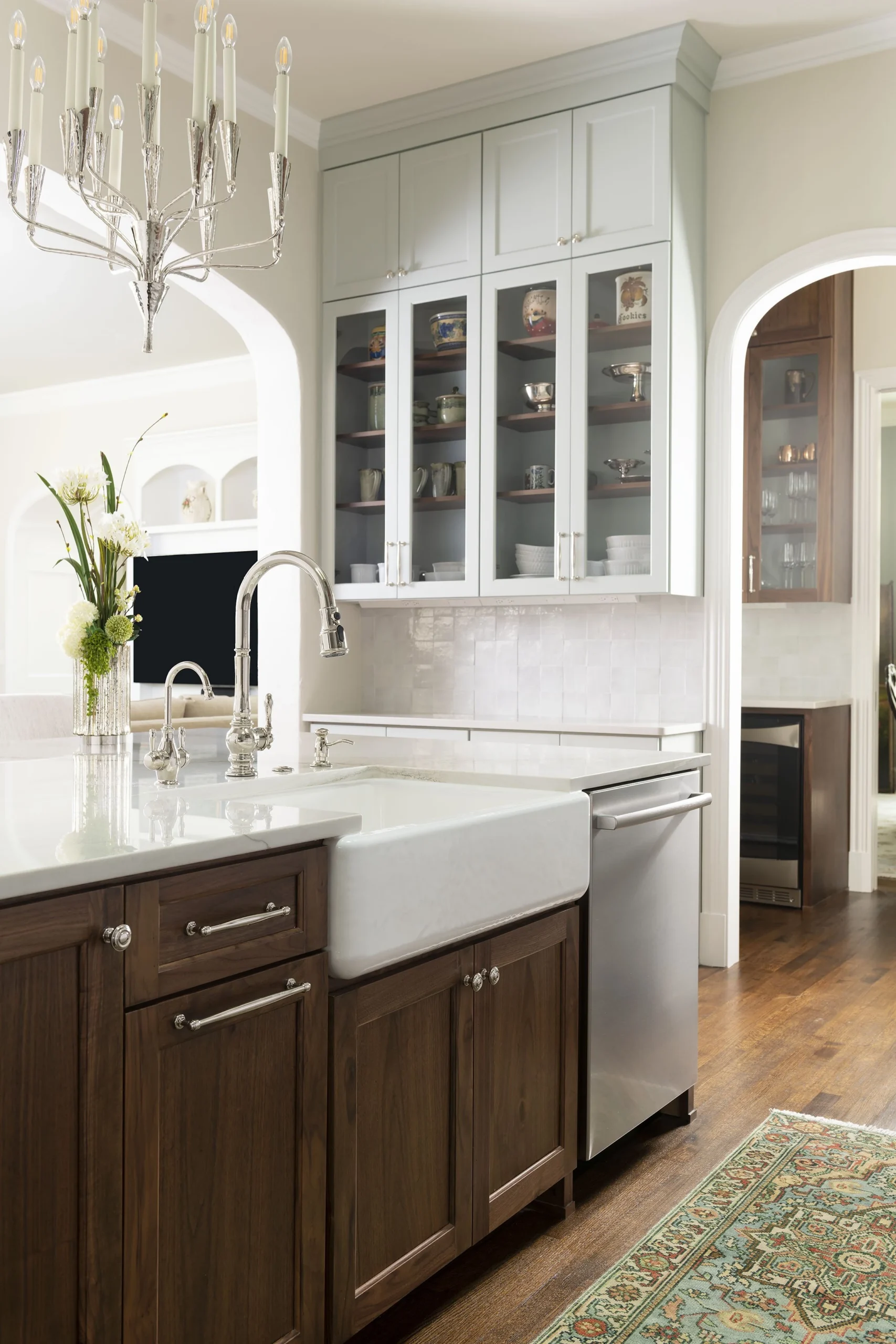
Use the most durable design logic for fixed components: floor plans, cabinetry proportions, flooring, major stone, built-in lighting, and architectural millwork. Introduce more expressive color and trend through paint, furniture, art, textiles, and smaller fixtures that can evolve with less disruption.
This does not require making everything neutral. Deep color, expressive stone, and distinctive details can be lasting when they are connected to the home’s character and used with conviction rather than scattered across every surface.
Choose materials that become richer with use
Natural materials often age more gracefully because variation and patina are part of their character. Wood develops depth. Certain stones soften and record use. Metals can change subtly over time. These qualities can create warmth that perfectly uniform surfaces sometimes lack.
The decision should still be informed. Marble, limestone, wood, plaster, unlacquered metal, and specialty finishes each have maintenance expectations. Some homeowners appreciate a lived-in patina; others prefer surfaces that remain visually consistent. There is no universally correct answer, only the right match between material and household.
Samples should be viewed together, at the correct scale, and under the home’s lighting. Material selections become timeless through relationship: undertones, texture, reflectivity, grain, and visual weight must support one another.
Proportion is more powerful than decoration
Rooms feel refined when major elements are correctly scaled. An island should suit the room rather than chase a standard size. Pendant lights should relate to the island and ceiling height. Cabinet rails, door widths, mirror dimensions, and fireplace surrounds should form a balanced composition.
These relationships are easiest to evaluate through detailed elevations, material samples, and three-dimensional visualization. A finish can be beautiful on its own and still feel wrong when its scale is not considered in the full room.
Proportion also creates visual rest. Consistent alignments and intentional negative space allow the eye to understand the design. Adding more features rarely corrects a composition that was not resolved at its foundation.
Craftsmanship gives simple design its presence
Restrained interiors place greater attention on execution. When there are fewer decorative distractions, cabinetry gaps, drywall transitions, stone seams, paint preparation, grout alignment, and hardware placement become more visible.
This is why minimal does not mean easy. Clean lines require accurate framing, coordinated rough-ins, careful substrate preparation, skilled fabrication, and patient installation. A simple reveal may involve more planning than a piece of trim used to conceal an irregular edge.
A timeless renovation should feel settled and complete. That quality comes from an idea carried consistently through drawings, field decisions, and final finishing.
Questions homeowners often ask
Does timeless design have to be neutral?
No. Timelessness is more closely related to proportion, coherence, quality, and connection to the architecture than to any one color palette.
Which elements are safest for trend-driven choices?
Paint, art, textiles, decorative objects, and some light fixtures are generally easier to update than cabinetry, floors, major stone, or structural features.
Are natural materials practical for an active household?
They can be, when the homeowner understands maintenance and accepts their natural variation. Performance should be evaluated by location, use, and expectations.
The finest homes across Southlake, Westlake, and Colleyville include traditional, transitional, and contemporary architecture; timeless design does not require making them look alike. Lenore Luxe grounds each renovation in the home’s character, proportion, honest materials, and craftsmanship so the finished interior can evolve while retaining its identity.
About the author
Mariusz Kalinowski is the owner of Lenore Luxe. A graduate of the Fashion Institute of Technology in New York with more than two decades of experience across New York and DFW, he leads luxury remodeling projects with a focus on design clarity, construction detail, and transparent communication.