
By Mariusz Kalinowski | February 12, 2026
A custom kitchen is not defined by one expensive material. It is the result of proportion, function, lighting, craftsmanship, and dozens of details working together without calling attention to themselves.
A beautiful kitchen starts with circulation
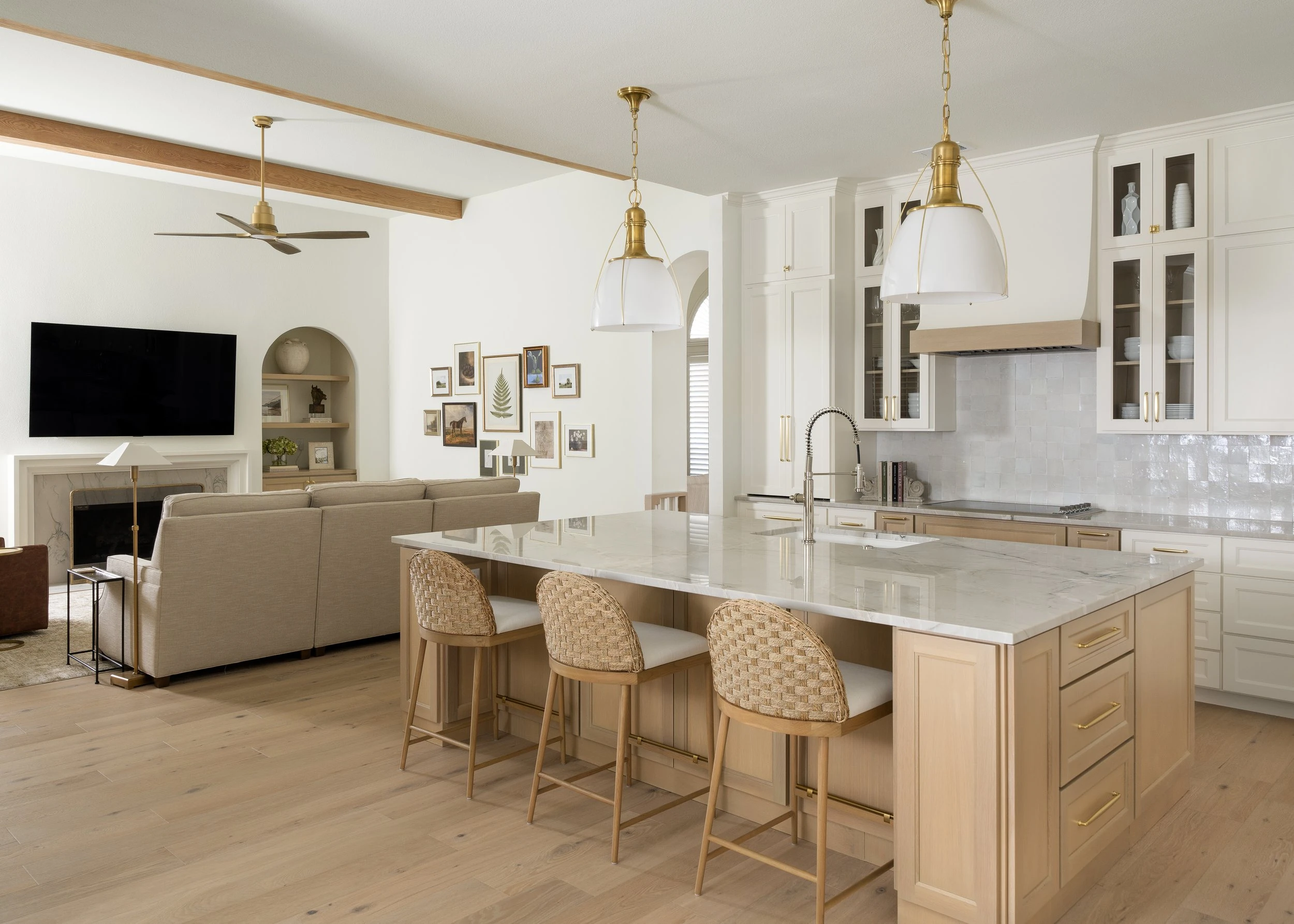
The most successful kitchens feel effortless because movement has been resolved before finishes are selected. The distance between refrigeration, preparation, cooking, cleanup, and serving zones should support the way the household actually uses the room. A generous island is valuable only when the walkways around it remain comfortable and appliance doors can open without conflict.
In larger Southlake and Westlake homes, the kitchen may also need to support two very different experiences: everyday family life and larger-scale entertaining. That can mean a secondary prep area, concealed appliance storage, a scullery, a beverage station, or a direct connection to outdoor living. Each feature should reduce visual noise and make the primary kitchen easier to use.
Good planning is often felt more than seen. When circulation, landing space, storage, and sightlines work together, the room feels calm even when it is active.
Custom cabinetry should respond to the architecture
Cabinetry occupies more visual space than almost any other element in a kitchen. Its proportions, reveals, door style, finish, and relationship to ceilings and openings determine whether the room feels integrated or assembled from parts.
True custom work allows cabinetry to respond to the architecture. Upper cabinets can align with windows and doors. Tall units can be composed as furniture rather than treated as storage boxes. End panels, appliance surrounds, toe kicks, crown details, and interior accessories can be designed as part of one system.
The inside matters as much as the exterior. Deep drawers, tray dividers, spice storage, concealed charging, appliance lifts, and dedicated zones should be selected for the homeowner’s habits. More cabinets do not automatically create better storage; the right storage in the right place does.
Layered lighting changes how the materials are experienced
A luxury kitchen should not rely on a grid of recessed lights alone. Ambient, task, accent, and decorative lighting each serve a different purpose. Under-cabinet lighting supports preparation. Integrated cabinet lighting gives depth to glass or open display areas. Pendants establish scale at an island. Carefully placed ceiling fixtures provide overall light without flattening the room.
Color temperature and dimming should be coordinated throughout the adjoining spaces. Warm stone, wood, metal, and paint can appear entirely different under the wrong light. Samples should be reviewed in the home whenever possible, in both daylight and evening conditions.
Electrical planning must happen early. Outlet locations, appliance requirements, switching, smart controls, and lighting channels can affect cabinetry and wall construction. When lighting is treated as part of the architecture, it supports the room instead of being added after it.
Material restraint often feels more luxurious than excess
Luxury does not require every surface to compete. A strong kitchen usually has a clear material hierarchy: one focal stone, one primary cabinetry finish, a supporting metal, and quieter surfaces that allow the composition to breathe.
Natural stone brings movement and variation, but slab selection and layout are critical. Veining should be considered across the island, backsplash, waterfall edges, and seams before fabrication. Wood tones should relate to flooring and nearby millwork. Hardware should feel substantial in the hand and correctly scaled to the doors and drawers it serves.
Durability must remain part of the conversation. The best surface is not simply the most exclusive; it is one that fits the household’s tolerance for patina, maintenance, heat, staining, and daily wear. Honest material guidance protects both the appearance and enjoyment of the kitchen.
Craftsmanship is revealed at the transitions
The difference between a good kitchen and an exceptional one often appears at the edges. Cabinet panels should meet walls cleanly. Stone seams should be planned. Backsplashes should terminate intentionally. Flooring should transition without awkward strips. Appliance panels and fillers should align with the surrounding millwork.
These details require coordination among designer, cabinetmaker, electrician, plumber, installer, stone fabricator, painter, and appliance team. Drawings help, but active field supervision is equally important because existing homes are rarely perfectly square or level.
A custom kitchen should feel as though it belongs to the home. That sense of permanence comes from resolving the invisible relationships, not from adding more decoration.
Questions homeowners often ask
What should be selected first in a kitchen remodel?
Begin with the plan, appliance specifications, and cabinetry concept. These decisions establish the dimensions and infrastructure that affect nearly every later selection.
Is a large island always better?
No. The island should be sized to the room, circulation, seating, storage, and intended use. Oversized islands can create uncomfortable reach distances and interrupt movement.
How do we keep a luxury kitchen from looking dated?
Use disciplined proportions, quality natural materials, integrated lighting, and a restrained palette. Trend-driven accents are easier to update when the architecture and cabinetry remain timeless.
Lenore Luxe approaches kitchen remodeling as an architectural and construction project, not a collection of finish selections. Every decision is considered in relation to function, proportion, craftsmanship, and the way the home is meant to be lived in.
About the author
Mariusz Kalinowski is the owner of Lenore Luxe. A graduate of the Fashion Institute of Technology in New York with more than two decades of experience across New York and DFW, he leads luxury remodeling projects with a focus on design clarity, construction detail, and transparent communication.